
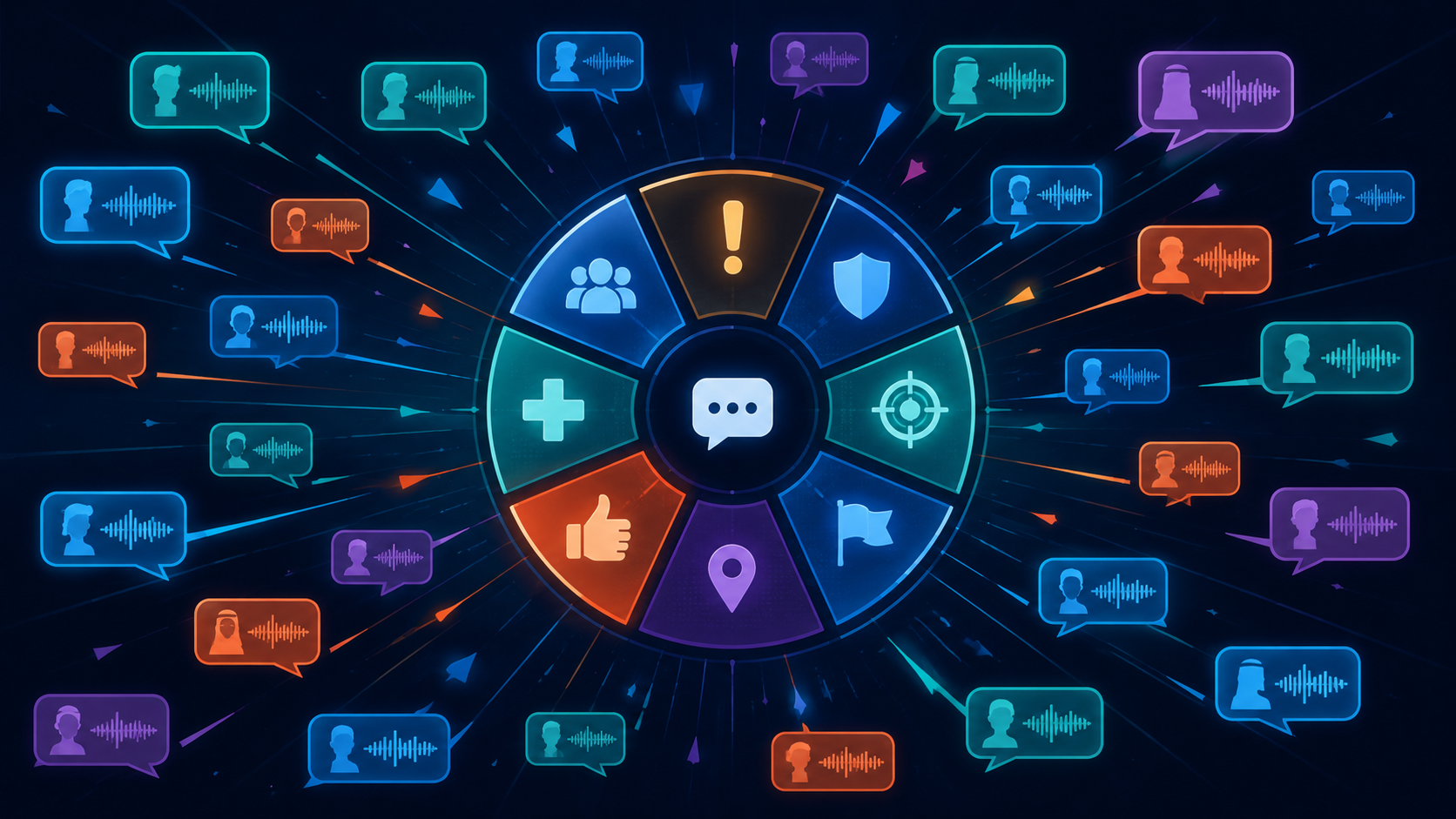
“Enemy spotted.” “Need healing.” “Nice shot.” Three lines, maybe a dozen words total — and in a live-service shooter with a dozen target languages, that’s thousands of individual audio files, each one needing to sound like something a real teammate would actually shout mid-fight. Quick-chat callouts look like the simplest VO in a game to localize. In practice, they’re one of the hardest things to get right at scale, because the thing that makes them work — sounding spontaneous — is exactly what templated, high-volume localization tends to kill.
The Volume Problem Nobody Sees Coming
A single-player cutscene line gets written once, directed once, recorded once. A co-op callout system might combine a dozen contextual triggers with multiple character voices, difficulty variants, and cooldown-based repeat lines to avoid sounding robotic on repeat use. Multiply that by every target language, and localization teams aren’t managing a script — they’re managing a matrix. Studios that don’t plan for this early often discover that “translate the barks” was never the real job. The real job is recreating an entire modular VO system, per language, without it collapsing into repetitive noise.
Why Literal Translation Breaks Barks
Combat barks are built for rhythm and urgency, not accuracy. “Watch out!” needs to land fast and land the same way every time a player hears it in the heat of a fight. A literal translation can be grammatically correct and still feel wrong — too long, too formal, missing the clipped, reflexive tone that makes a callout read as instinctive rather than scripted. Localization teams working on quick-chat systems often rewrite rather than translate, prioritizing how a line sounds under pressure over matching the English word-for-word. That’s a different skill than narrative dialogue localization, and studios that treat it the same way tend to end up with barks that are accurate and lifeless.
Keeping Repetition From Sounding Like Repetition
Players hear the same handful of callouts hundreds of times per session, which makes variation a functional requirement, not a creative nicety. Most systems solve this in English with multiple recorded variants per trigger, cycled or randomized so “Reloading!” doesn’t sound identical every single time. Replicating that variant pool across every localized language multiplies the recording workload significantly — and it’s an easy place for budgets to quietly cut corners, resulting in localized versions where the English cast sounds natural and repetitive-fatigue-free, while other languages get one flat take per line.
Building for Scale From the Start
The studios handling this well treat multiplayer VO as a system to localize, not a script. That means designing the variant structure with every target language in mind before recording starts, briefing voice directors on tone and rhythm rather than literal meaning, and budgeting recording time for repeat variants in every language, not just English. Some studios are also building shared terminology and tone guides specifically for quick-chat systems, separate from their narrative localization bibles, since the two require genuinely different voice direction.
Co-op callouts are small individually, but they’re some of the most frequently heard lines in the entire game. Getting them right, at scale, across languages, isn’t a footnote to localization — for live-service and multiplayer titles, it’s some of the highest-repetition audio players will ever hear.


