
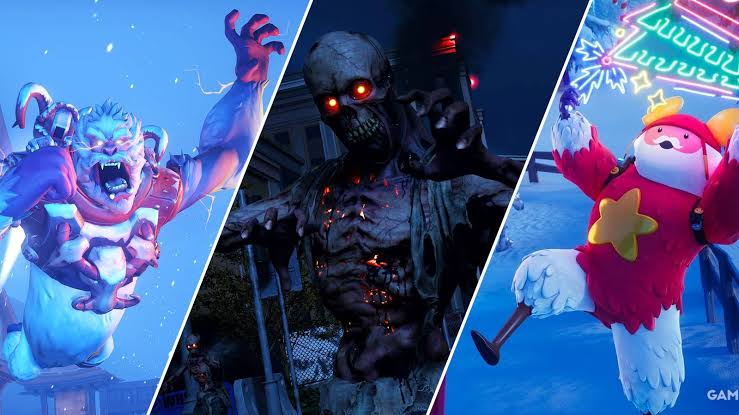
Image: gamerant.com
How Studios Localize Seasonal Event Audio Without Breaking Canon
Live-service games thrive on seasonal content.Holiday celebrations, limited-time quests, themed events, and battle pass updates keep players engaged throughout the year. From spooky Halloween missions to festive winter events, these additions refresh the player experience without requiring a full expansion.
But while seasonal content may only be available for a few weeks, localizing its audio is far from temporary. Every new voice line must feel consistent with the game’s world, characters, and lore—even if it disappears after the event ends. For localization teams, that means striking a careful balance between fun, cultural relevance, and narrative continuity.
Seasonal doesn’t mean disconnected
A holiday event may introduce new dialogue, character interactions, or announcer lines, but players still expect the world to feel believable.
If a serious medieval fantasy hero suddenly starts using modern slang during a seasonal event, or a sci-fi commander sounds completely out of character, immersion can quickly break.
Localization teams work closely with writers and voice directors to ensure that temporary dialogue matches the established personality, tone, and speaking style of each character.
Even playful content needs to feel authentic within the game’s universe.
Cultural adaptation requires careful choices
Seasonal events are often inspired by real-world holidays, but not every celebration has the same meaning—or level of recognition—around the world.
Localization teams may need to adapt references to:
- regional traditions
- humor
- food
- seasonal customs
- cultural expressions
The goal isn’t always to replace one holiday with another. In many cases, it’s about making dialogue feel natural without confusing or excluding players in different regions.
This requires creative adaptation rather than literal translation.
Temporary content, permanent standards
Although seasonal audio is available for a limited time, it must meet the same production standards as the base game.
That includes:
- casting consistency
- voice direction
- pronunciation checks
- audio quality
- technical implementation
Players often return to seasonal events every year, meaning reused voice lines must still feel polished and consistent long after they were first recorded.
A rushed localization can quickly become noticeable when content returns in future seasons.
Live-service schedules leave little room for error
Unlike traditional game releases, seasonal updates are tied to fixed dates.
Halloween events cannot launch in November, and winter celebrations lose their impact if they arrive after the holidays.
This creates tight production schedules for localization teams, who often work on:
- battle pass dialogue
- event NPC conversations
- announcer packs
- limited-time cinematics
- promotional trailers
Multiple language versions must be recorded, reviewed, and approved in time for a simultaneous global release.
Careful planning is essential to maintain quality without delaying the event.
Seasonal events are designed to surprise players, but they should never undermine the game’s identity.
Successful localization ensures that festive dialogue feels like a natural extension of the game’s universe. As live-service games continue to grow, seasonal content is becoming a regular part of production pipelines. That means localization teams must think beyond translation, considering lore, character consistency, and cultural context every times an update comes.


